For shoe brands and retailers, the quality of your bulk shoe care accessories directly reflects your own standards. A poor brush can hurt a customer’s trust in your main products. Two of the most important factors, however often overlooked, in shoe brush quality are the handle’s wood and the horsehair bristle’s density.
These points mark the difference between an excellent tool and a defective one. This guide, offering the viewpoint of a manufacturer, makes it easy for you to get the best horsehair shoe brushes in your wholesale orders and thus carry a product that enhances your brand.
The Principium: Wood and Market Positioning
The type of wood used for the brush handle should not only be aimed at the aesthetic aspect but also needs to be a reasonable decision that determines the cost, quality, and target market of the product.
Beech Wood: The Elite Option
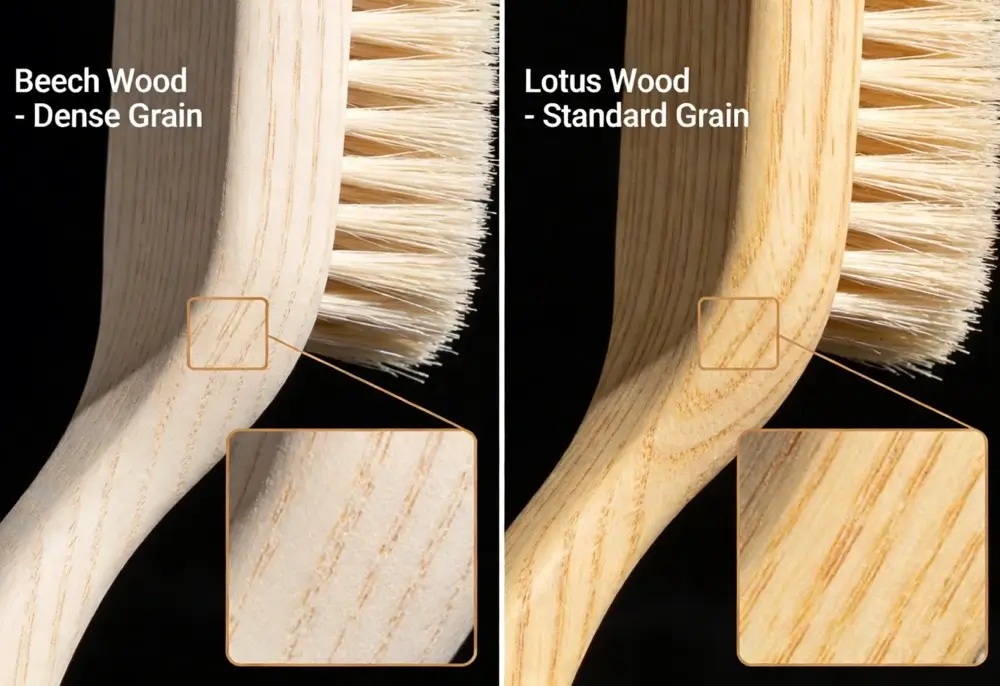
Beech wood is heavy, dense, and has a nice, even grain. When you hold it, you feel the mass and strength that it carries, which demonstrates the quality instantly. This wood is the first choice to be applied in top shoe brands, luxury retail collections, and/or deluxe gift sets.
With its wonderful appearance and handfeel, it deserves a higher retail price that corroborates the brand’s high standard.
Lotus Wood: The Regular and Economical Choice
Lotus wood, also called Schima Superba, is lighter and more porous than beech. Its main advantage is the lower unit cost, which makes it the industry standard for volume markets. This is the perfect wood to use for bulk orders of shoe care accessories, promotional items, and starter shoe care kits where price is the main concern.
Strategic Sourcing: Matching Wood to Goals
The wood selection must directly correspond to your company goals. The table below demonstrates the significant differences thus guiding you in sourcing.
| Feature | Beech Wood | Lotus / Schima Superba Wood |
| Touch & Weight | Heavy, Substantial, Premium | Light, Economical |
| Longevity | High; anti-chipping/denting | Standard; good for general application |
| Design | Fine and elegant grain | Variable grain |
| Unit Cost | More expensive | Less expensive |
| Suitable For | High-end shoe brands, luxury gift items | Mass-market, promotional kits |
| Market Positioning | Justifies a high price | Maximizes margin through volume |
The Heart of Effectiveness: Tuft Density
Apart from the handle, another significant determinant of a horsehair brush’s performance is a key manufacturing detail: tuft density.
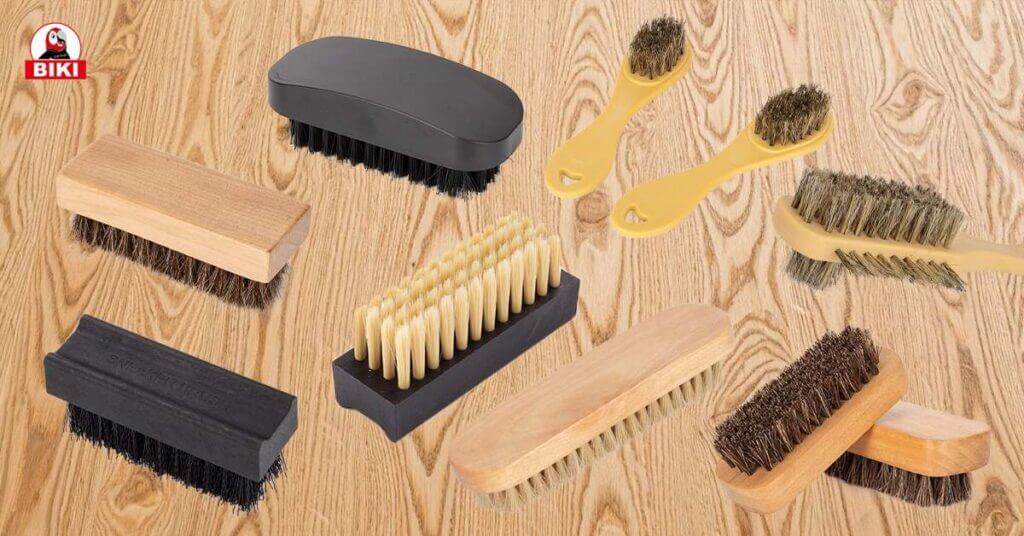
What Is “Tuft Density”?
Tuft density is the term that refers to the number of single horsehairs that go into each drilled hole (a “tuft”) and how close they are to each other on the wood block. For instance, think about the difference between a lawn that has thin, patchy grass and one with a thick, dense turf. A shoe brush’s surface can likewise be sparse or dense.
The Low-Grade Density Problem
A brush with low tuft density is a significant quality risk. When you buff the shoe hard, the gaps in between the bristles might allow the rough edge of the wood block to touch the shoe easily, causing scratches and damages on high-end leather that end up making your customers unhappy with their purchases or returning them.
A high-density brush, conversely, creates a solid cushion that lifts dust particles and buffs polish to a high shine without harming the shoe’s surface.
Beyond Density: Anti-Shedding Technology
A common failure in cheap brushes is bristle shedding. Stray hairs that remain on a recently polished shoe show poor manufacturing and create a bad user experience. We utilize an advanced stapling method that anchors each tuft deep within the wood block.
This secure anchoring system eliminates shedding and extends the life of the product, ensuring a clean, professional end result for the user. This commitment to superior shoe brush manufacturing standards protects your brand’s reputation.
A Point on Bristle Material
Even if synthetic bristles find their uses in applicator or tough cleaning brushes, 100% horsehair remains the best standard for polishing. Its natural fibers have the perfect mix of softness to protect the leather from damage and texture to produce enough heat through friction to achieve a high-gloss shine.
Building Your Brand: Strategic Customization
A custom logo shoe brush transforms a simple accessory into a strong branding tool. The method of customization should match your product tier and brand identity.
Option 1: Laser Engraving
Laser engraving burns your logo directly into the wood, creating a sharp, permanent mark that shows a sense of permanence and quality. It is best done on the Beech wood handles with their denser grain and is the ideal choice for branding brushes meant for the premium and luxury markets.
Option 2: Silk Screen Printing
Silk screen printing puts ink on the surface of the handle. This method is very flexible, cost-effective, and perfect for getting specific brand color schemes or multi-color logos.
Conclusion: Source with Confidence
The quality of a wholesale horsehair shoe brush is not a minor aspect; it is a significant factor that directly influences customer trust and brand value. Investing in high-density wood and bristles is an investment in your reputation. Poor accessories should not be allowed to affect the overall quality of your core product line.
Partner with a manufacturer who is intimately familiar with the science that goes into producing the perfect shine and is committed to the highest industrial standards.
Try the Difference: Request a Sample
We invite procurement managers and brand owners to source with confidence. Contact us to request a Biki sample kit. You will be able to feel the solid weight of Beech wood and see the superior tuft density of our brushes for yourself, checking the quality that will carry your brand name.