What sets an inexpensive, dangerous sneaker cleaner apart from a premium, material-safe one? The answer lies in formulation science. In order to propose a product that is effective in cleaning but remains soft, the top companies in shoe care have to make a careful combination of chemistry and material knowledge.
This article is an inside view of how a shoe cleaner manufacturing process operates. The focus will be the major technical challenges at research labs, from selecting the appropriate cleaning agents to explaining the significance of pH-neutral shoe cleaner formulations and finally to showing the cut-through effect of novel enzyme technology on all of these.
The Anatomy of a High-Performance Sneaker Cleaner Formulation
A professional sneaker cleaner formulation contains much more than just soap. It is a mixture of different chemical agents that perform specific functions. Understanding the components gives an insight into the chemistry of the product being safe and effective.
- Surfactants (Surface Active Agents): These are the primary cleaners. Every molecule consists of two parts: the head attracted to water and the tail that is drawn to dirt. This arrangement of the surfactant molecules makes it possible for them to decrease the surface tension of the water, encapsulate the dirt, and finally lift it off the surface.
- Solvents: Primarily, clean water is the solvent. It acts as a carrier for all other ingredients and also distributes them evenly. Furthermore, it dissolves water-based stains, thereby helping the surfactants to function fully.
- Chelating Agents: These components are crucial for effective cleaning in actual cases. They can “trap” and neutralize mineral ions that are in hard water, such as calcium and magnesium. As a result, the surfactants have no chance of being blocked by the minerals, hence they do not leave a dull film on shoes.
- Conditioning Agents: These are additives besides the surfactants that are specifically formulated for cleaning materials, such as leather or suede. They usually contain ingredients like glycerin, lanolin, or natural oils that substitute the moisture being lost due to cleaning, thus preserving the softness of the material and preventing it from becoming dry, stiff, or cracked.
- Enzymes: Enzymatic additives are specific biological agents for removing stains. They disassemble complex organic molecules into simple water-soluble compounds that are easily removed.
- Preservatives & Stabilizers: It is necessary to include preservatives in commercial products to keep away bacteria and fungi in the water-based formula. Additionally, stabilizers ensure that the product retains its viscous state, its color, and that it is still a cleaning agent until its shelf life ends; this prevents the ingredients from separating or breaking down.
The Surfactant Dilemma: Balancing Cleaning Power with Gentleness
Every cleaner’s efficacy stems from its surfactant. The biggest hitch for formulators is to find surfactants that are bad for the technical materials they clean such as Primeknit, soft suede, and bonded leather as well as remove the dirt without exerting any damage.
Most often, big-name manufacturers will combine two or more surfactants to achieve a desired premise. This technique confers powerful cleaning while safeguarding delicate fibers, glues, and colors to a large extent. The relative ratio has a crucial weight in the case of the top-notch, truly material-safe shoe cleaner.
A well-designed sneaker cleaner uses a ratio of the two groups of surfactants that is very specific, which consists of the mixture of non-ionic and amphoteric surfactants to give a robust cleaning without any risk to the shoe.
| Surfactant Type | Cleaning Power | Gentleness on Materials | Common Use in Sneaker Cleaners |
| Anionic | High | Moderate to Harsh | Powerful degreasers. Often used in small, targeted amounts for tough stains on rubber soles, but can be too harsh for delicate uppers and may strip color. |
| Non-ionic | Moderate | Excellent | The workhorse. Excellent at emulsifying oils and general grime. They are gentle on most materials and colors, making them a key component in premium formulas. |
| Cationic | Low | Excellent | Rarely used for cleaning due to their low detergency. They are more common in fabric softeners or as anti-static agents, which are not primary cleaning functions. |
| Amphoteric | Moderate | Excellent | The balancer. These are extremely mild, produce good foam, and work well with other surfactant types. They are common in high-end, gentle, and “tear-free” type formulas. |
Why a pH-Neutral Formula is the Gold Standard in Sneaker Care?
As sneakers are versatile products, manufacturers utilize a variety of specialty adhesives, include different materials, such as natural leathers and synthetic polymers, and so on. Consequently, a formula that is either too acidic or too basic can induce dreadful effects, which can, in turn, convert a sleigh into an expensive and irreversible error.
Thus, a pH-neutral shoe cleaner is needed as part of the care line for any premium shoe brand. Incorrect pH levels can damage the material and it won’t appear to look like it did before.
Improper pH results in:
- Weakening Adhesives: The acidic or basic shock goes on a chemical path dealing with the sole adhesive bonds that hold the sole to the upper. This comes out as the sole separation that finally destroys the whole sneaker.
- Causing Color Bleeding: Some highly aggressive formulas can deal with unstable dyes in materials such as bright suede, nubuck, and dyed canvas. Apart from this, they can change the hitherto good color of the shoe to faded spots or even transfer other colors to other parts of the shoe. (You can read more about protecting delicate materials by visiting our guide on How to Clean Suede & Nubuck Sneakers.)
- Damaging Natural Fibers: Materials such as leather, suede, and cotton are those that are most affected by a high level of pH. Repeated exposure to such environments can lead to brittle, stiff, and yellow substances. For example, a basic cleaner can strip natural oils from leather causing it to age faster.
- Degrading Synthetic Polymers: The high pH can damage the polymer structures in materials such as knit uppers (e.g., Flyknit, Primeknit) or foam midsoles (e.g., Boost, React) that are made up of complex polymers. The polymer structures, as a result, will lose their stretching capacity, structural strength, and might even lose overall lifespan.
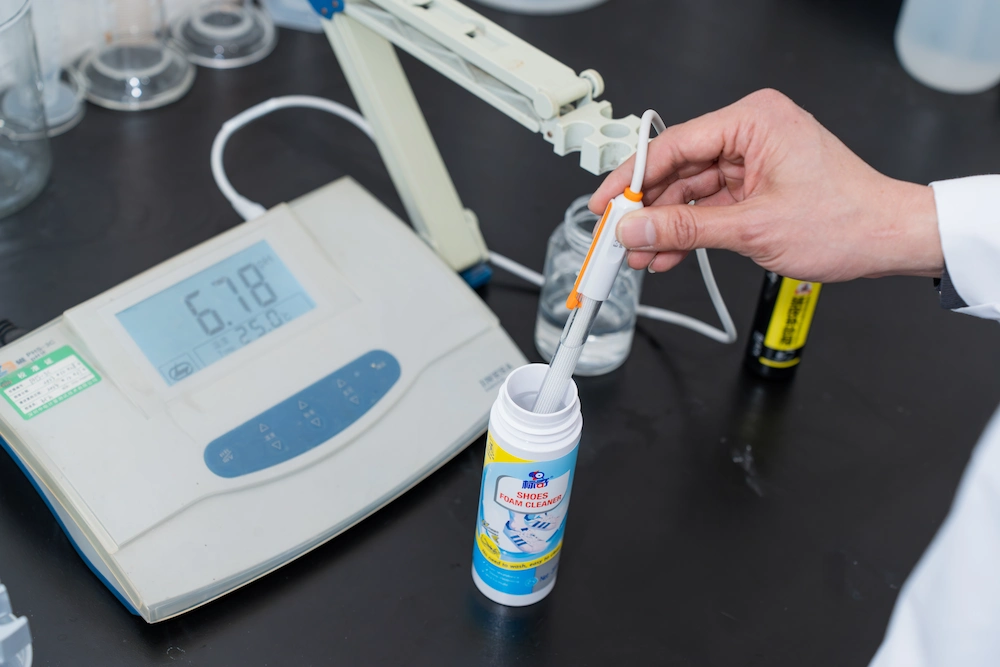
Thus, it is clear why the good manufacturers spend significantly on research and implement rigorous quality control measures. The objective is to mend the pH imbalance in their sneaker cleaner formulation which is usually ensured by remaining in the neutral range of 6.5 to 7.5.
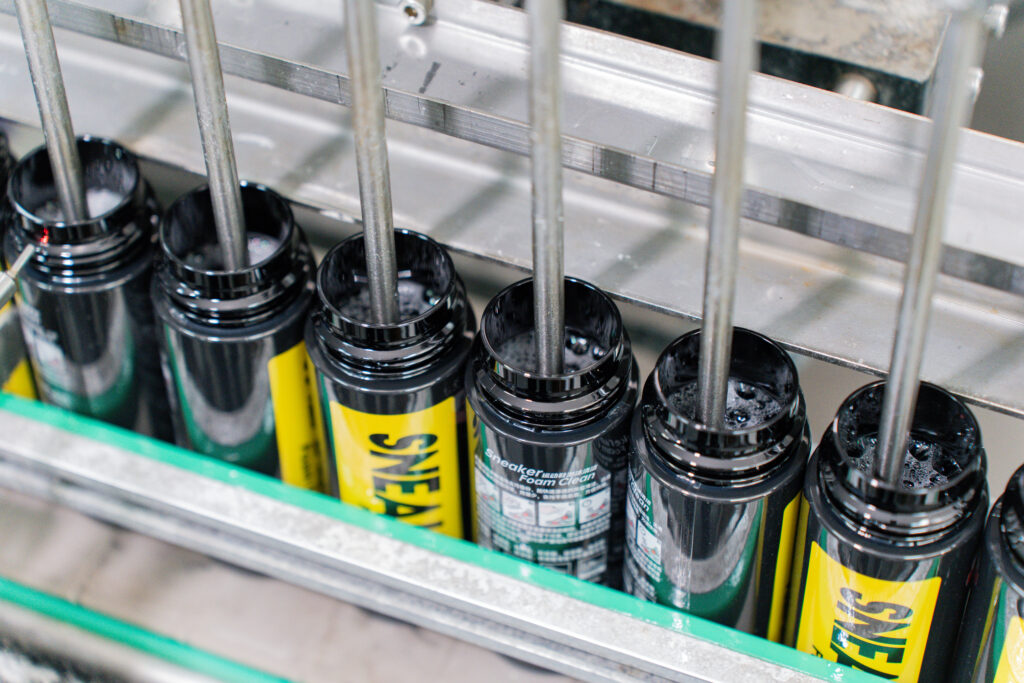
How Enzyme Technology Tackles Stubborn Stains?
Enzyme technology makes them distinctive compared to the traditional ones. While surfactants are highly efficient in lifting old-fashioned dirt and oil, enzymes tend to be more selective and active in degrading organic compounds. These compounds are sometimes resistant to surfactants.
They function as a lock and key. For instance, an enzyme is precisely designed to disintegrate a certain molecule, which renders it to be extremely efficient and harmless to the surface it works on.
Here are some dominant enzymes in a sneaker cleaner formulation:
- Protease: This type of enzyme is intended for breaking down protein-based stains. It works extremely well against common sneaker foes such as grass stains, blood, mud, and some food spills.
- Amylase: This kind of enzyme breaks down carbohydrate- and starch-based stains. Its work goes from food and sauces to sugary drinks and other starch messes.
- Lipase: This enzyme is specifically for breaking down fats and oils. It is effective in targeting grease, body oils, and food from oils.
A quality shoe care manufacturer will integrate a multi-enzyme blend into their formula. That will enable them to manage a wide range of stains, thus providing a product that can deal with real-world messes. Being sure of the formulation capabilities of a partner is vital. (This is just one of the many things to keep in mind when Choosing a Shoe Cleaner Manufacturer.)
From Lab to Bottle: The Shoe Cleaner Manufacturing Process
Only an excellent formulation can work well through the whole process. The sneaker cleaning production line needs precision, consistency, and stringent quality controls; all of these at every stage will guarantee consumers a safe and effective final product that will last.
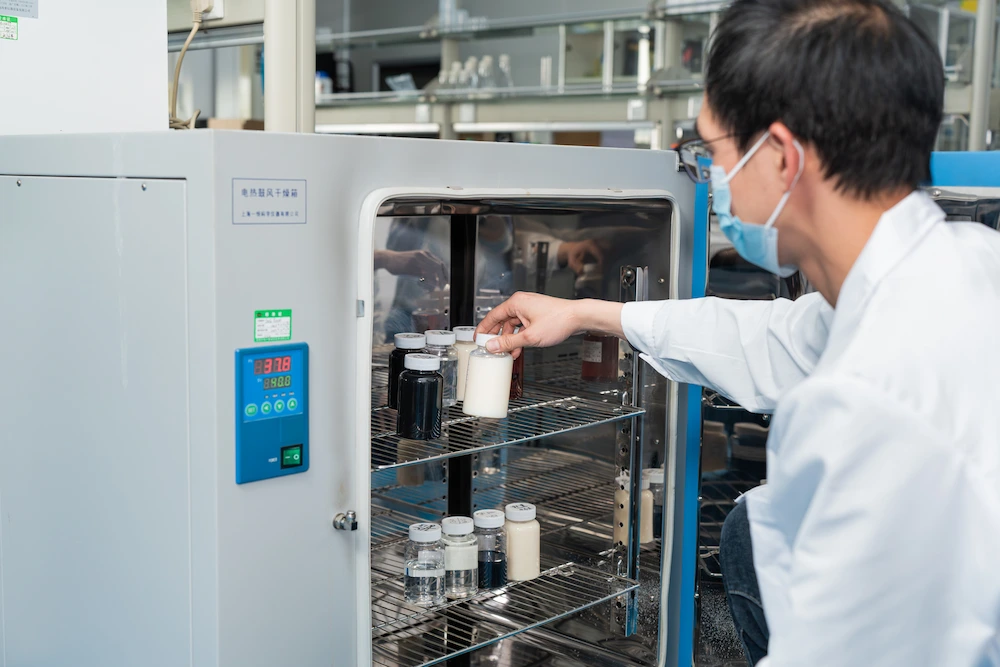
Here’s a basic overview of how a top-notch sneaker cleaner is brought to fruition in a professional plant:
- Raw Material Sourcing & Vetting: The string of events starts with obtaining raw materials of high purity from certified and trusted suppliers. All batches of raw materials—be it surfactants, enzymes, or preservatives—are identity, purity, and activity tested before they go anywhere near the inventory. This avoids contamination and ensures constant quality for every batch.
- Accuracy in Mixing & Batching: During the process, all ingredients are weighed to ensure accuracy and then added to a large-quality stainless-steel mixing vessel in a controlled clean environment. The order of addition is very critical; for instance, sensitive enzymes and fragrances typically come in last to avoid the damaging effects of temperature changes or chemical reactions. The mixing speed and temperature pronouncements are carefully observed to guarantee all parts amalgamate completely to form a uniform solution.
- In-Process Quality Control (QC): As the mix is in progress, and after the batch is done, samples are taken straight from the vessel for testing. This the main guarantee that the batch quality is perfect. Tests include:
- pH Level Testing: A digital pH meter ensures the formula is neutral.
- Viscosity Testing: A viscometer measures the thickness of the liquid to ensure it has the correct consistency for its intended use (e.g., a thin liquid for a spray, a thicker gel, or a solution designed for foaming).
- Visual & Smell Checks: Technicians check for the correct color, clarity, and scent, making sure there are no signs of contamination or difference from the master sample.
- Stability & Performance Testing: The final approved batch is subjected to additional tests. Stability examination is achieved by putting test samples through freeze-thaw and high-temperature exposure cycles, mimicking storage and shipping conditions to ascertain that the product will not separate or spoil. Performance is reconfirmed by testing the batch on various sneaker materials.
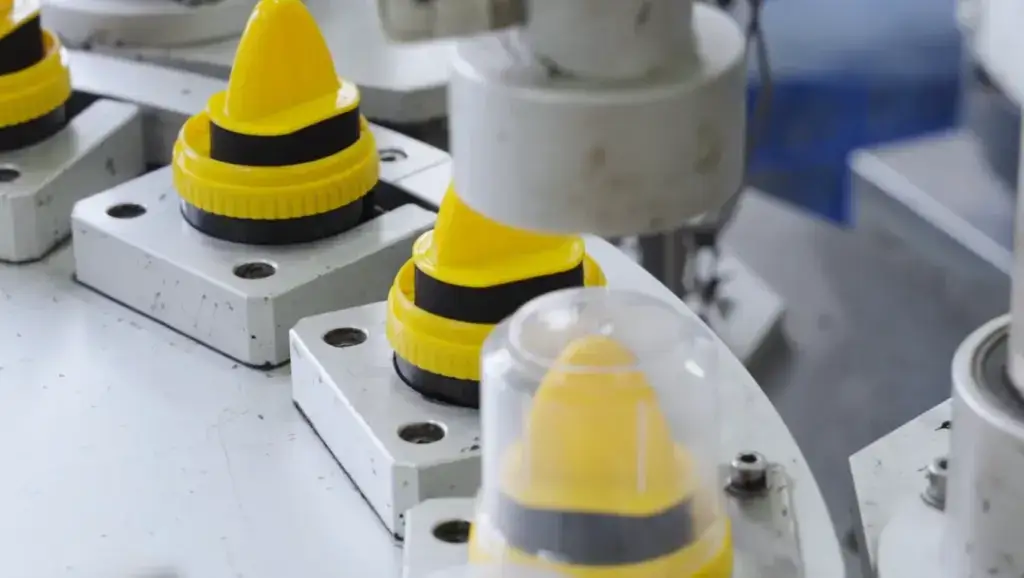
- Filling & Packaging: After everything else checks out, the product shifts to an automated filling line where it is cleaned up in a germ-free environment before it is bottled, capped, and labeled.
How Biki Guarantees Safe & Effective Sneaker Cleaners?
Knowledge is the starting point; practical application and consistency are the things that make a difference. Our in-house research lab at BIKI is built around these principles. Our trust in pH-neutral, material-safe shoe cleaner formulas is the reason we are a preeminent sneaker cleaner manufacturing partner for brands all around the globe. We do not only mix the ingredients; we build the solutions. For brands that wish to partner with the manufacturer that puts formulation science on top, BIKI has the central know-how which guarantees the efficiency and safety of the products.
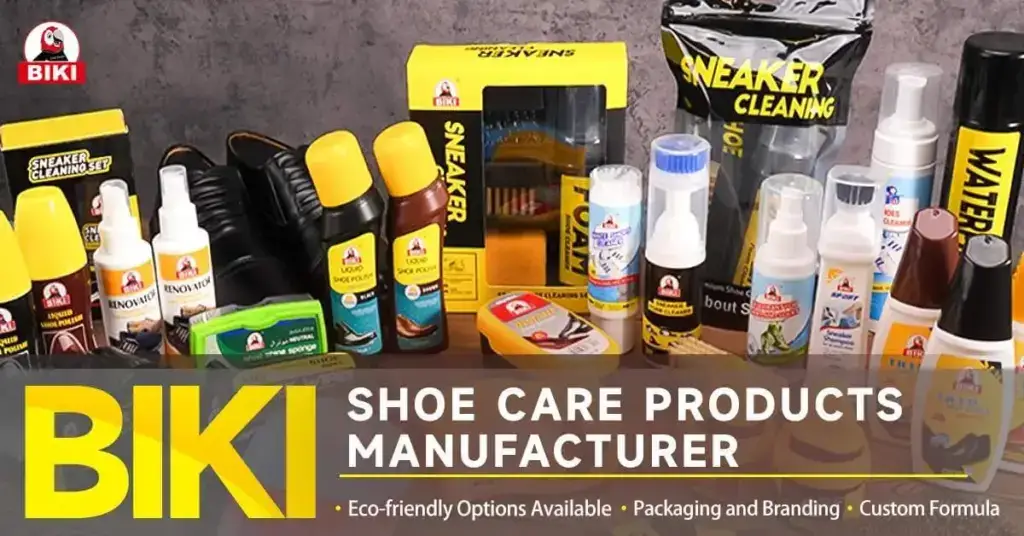
Are you ready to create something that will capture attention?
Learn more about our custom formulation services
Conclusion: Your Formula for Success
The shaping of an outstanding sneaker cleaner is a meticulous and accurate process that is based on science. The premise is deep with thought from the right mix of multi-surfactant and enzyme formulation to the consistent commitment of a pH-neutral formula; every single aspect is vital.
For brands wanting to deliver genuine value and build customer trust, forming partnerships with a shoe care manufacturer who is at the top of the science game is not merely an advantage; it is the formula for success.